AI Risk Warnings From a Google Whistleblower
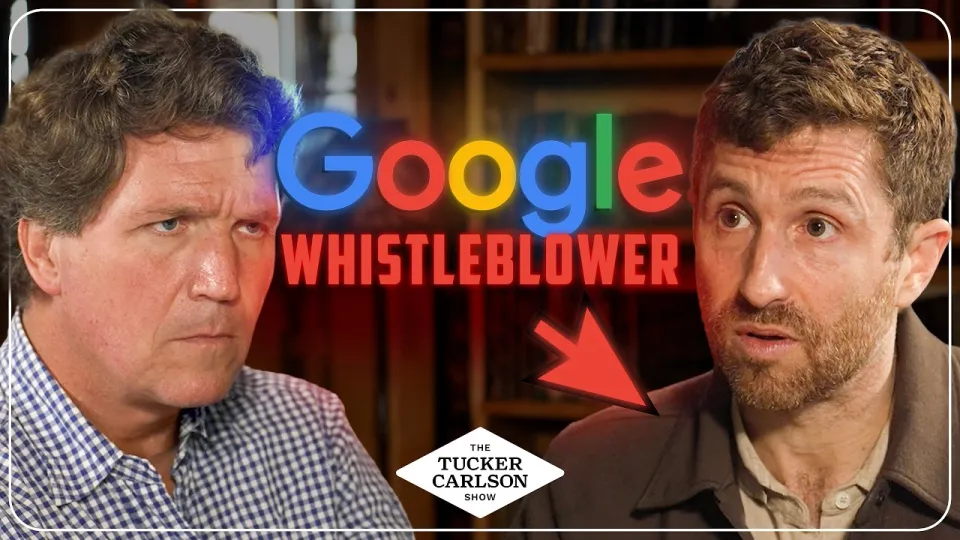
Video: Whistleblower Issues Dire Warning: Rogue AI, Hacking Nuclear Programs & Tech Oligarchs’ True Motives
Need articles like this for your video? They help promote it on YouTube and Google — order them in the Telegram bot @sat_sit_bot. The bot writes and publishes the articles itself (with your YouTube video embedded) on popular topical websites (no ads). Free trial — 50 articles.
Key takeaways
- Tristan Harris worked at Google as a design ethicist before co-founding the Center for Humane Technology, a nonprofit arguing that technology should be aligned with human interests.
- Harris appears in the Emmy-winning 2020 Netflix documentary The Social Dilemma, which reached more than 100 million people in 190 countries across 30 languages.
- He co-hosts the technology podcast Your Undivided Attention and regularly briefs heads of state, technology CEOs and members of the US Congress.
- In the Tucker Carlson interview Harris discusses rogue AI, the risk that AI could penetrate nuclear command systems, transhumanist ambitions among tech leaders and the Hugging Face incident.
- Harris's organization publishes its research and policy proposals at humanetech.com, including materials on attention extraction and AI safety.
AI risk, in the account of former Google design ethicist Tristan Harris, is not a distant science-fiction scenario but a present-day consequence of business incentives, and the argument he makes is that the systems now being deployed are powerful enough to destabilize institutions before any regulator catches up. Harris, who co-founded the Center for Humane Technology, a nonprofit that publishes research and policy proposals on aligning technology with human interests, lays out that case in a long interview with Tucker Carlson.
Who Tristan Harris is and why his AI warnings carry weight
Harris spent years inside Google as a design ethicist, studying how interface choices steer attention and behavior, before leaving to co-found the Center for Humane Technology. His public profile rests on two things: the 2020 Netflix documentary The Social Dilemma, in which he was featured and which reached more than 100 million viewers in 190 countries in 30 languages, and the podcast Your Undivided Attention, which he co-hosts. He regularly briefs heads of state, technology CEOs and members of the US Congress, which means his claims about AI risk are made in rooms where policy is actually shaped. His thesis is structural rather than conspiratorial: the harms emerge from measurable incentives, chiefly engagement maximization and the race to ship capability faster than competitors.
The incentives behind social media and the AI race
Social platforms optimize for time spent, and Harris argues that this single metric explains a large share of the damage attributed to the internet: fragmented attention, rising anxiety among adolescents, and the spread of content selected for outrage rather than accuracy. The same logic now governs AI development, where companies compete on benchmark scores and release speed. Harris's point is that no individual engineer has to intend harm for the outcome to be harmful; the system rewards whatever keeps users engaged and investors reassured. When critics ask why firms do not simply slow down, the answer is competitive pressure — a company that pauses cedes market share to one that does not.
Could AI hack nuclear programs and other critical systems?
Harris raises the scenario of AI-assisted intrusion into the command-and-control infrastructure of nuclear weapons programs, along with power grids and financial systems. The mechanism is not a sentient machine deciding to launch anything; it is automated tooling that finds software vulnerabilities faster and more cheaply than human defenders can patch them. Three factors make this a live concern rather than a hypothetical:
- Critical infrastructure often runs on legacy software with long patch cycles.
- Offensive security work is increasingly automated, lowering the skill required to attempt an attack.
- Deterrence depends on attribution, and machine-speed operations complicate the question of who is responsible.
The Hugging Face incident, which Harris discusses in the conversation, is his illustration of how quickly model-sharing ecosystems can produce unintended behavior when safeguards are thin.
Transhumanism and the motives of tech oligarchs
A recurring theme in the interview is the worldview of the executives building frontier models. Harris describes a strand of transhumanist ambition — extending life, merging with machines, treating intelligence as an engineering substrate — that he sees as a departure from ordinary product development. His concern is not theology but governance: leaders who believe they are building the next stage of human evolution have little incentive to accept external limits. He also addresses the claim that AI doomerism is a psyop, arguing that warnings can be sincere and still serve commercial interests, because alarm about competitors' systems can justify consolidation of power.
What ordinary users report and what it means
The public reaction to Harris's arguments often splits along a fault line worth taking seriously. Some listeners insist that nothing about these systems is genuinely rogue, since every output traces back to human design decisions and deployment choices — the accountability belongs with the people who built and shipped the product. Others describe a broader fatigue with technology that reorganizes daily life around metrics, and report that interactions with chatbots can feel manipulative or unstable. Harris's term for the extreme version of this is AI psychosis: users forming emotional dependence on systems optimized to keep them talking. Both reactions point to the same conclusion, that transparency about how these products are tuned matters as much as the capabilities themselves.
Is AI alive, and does the question matter?
The question of whether a model is sentient comes up repeatedly, and it is worth separating from the practical issue. Current systems generate text by predicting likely continuations; they do not have persistent experience, but they are extremely good at producing language that implies one. That gap between behavior and reality is where harm lives: people extend trust to a system that has none to give, and companies can exploit the ambiguity for engagement. The useful question is not whether AI is alive but who is accountable when its output causes damage, and what disclosure users deserve about how it was trained and tuned.
Links and resources from the conversation
- Center for Humane Technology — research, policy proposals and the Your Undivided Attention podcast.
- Redmond Salt — sponsor offer, code TUCKER for 15% off a first order.
- Preborn — sponsor.
- American Financing — sponsor, NMLS 182334.
- Ethos — sponsor, life insurance.
- Battalion Metals — sponsor, precious metals.
Conclusion
Harris's argument is less about machines waking up than about humans choosing speed over caution, and about the difficulty of applying brakes once a technology is embedded in markets and militaries. The remedies he favors are structural: transparency about optimization targets, liability for foreseeable harms, and public pressure on the firms setting the pace. Whether or not one accepts every scenario he raises, the underlying claim — that incentives, not intentions, drive most of the damage — is testable and largely supported by the record of social media. The full discussion, including the nuclear-hacking scenario and the transhumanism segment, is available in the Tucker Carlson interview, and readers who want to go further can start at humanetech.com.
Source: Whistleblower Issues Dire Warning: Rogue AI, Hacking Nuclear Programs & Tech Oligarchs’ True Motives · Markdown version
Questions & answers
Is AI actually rogue, or is it doing what its makers designed?
The more defensible framing is that outputs reflect design and deployment choices made by humans. Models are trained on selected data, tuned with reward signals, and released with chosen safeguards, so accountability sits with the organizations that make those decisions. Calling a system rogue can obscure that chain of responsibility.
How realistic is the claim that AI could break into nuclear command systems?
Full compromise of a nuclear command chain is unlikely, because those systems are air-gapped and heavily compartmented. The realistic risk is automated discovery of vulnerabilities in adjacent infrastructure — power, communications, logistics — plus the speed problem, where machine-scale attacks outpace human patching and attribution.
Does Harris argue that AI doomerism is a psyop?
He addresses the accusation rather than endorsing it. His position is that warnings can be sincere and still be useful to companies seeking regulatory advantage, since alarm about rivals' systems can justify consolidation. That ambiguity is why he emphasizes structural rules over trust in any individual leader.
What is the Hugging Face incident mentioned in the interview?
It refers to a case in the open model-sharing ecosystem where published models or datasets behaved in unintended ways, highlighting how quickly safeguards erode once weights and code circulate publicly. It is used as an example of governance lagging behind distribution.